
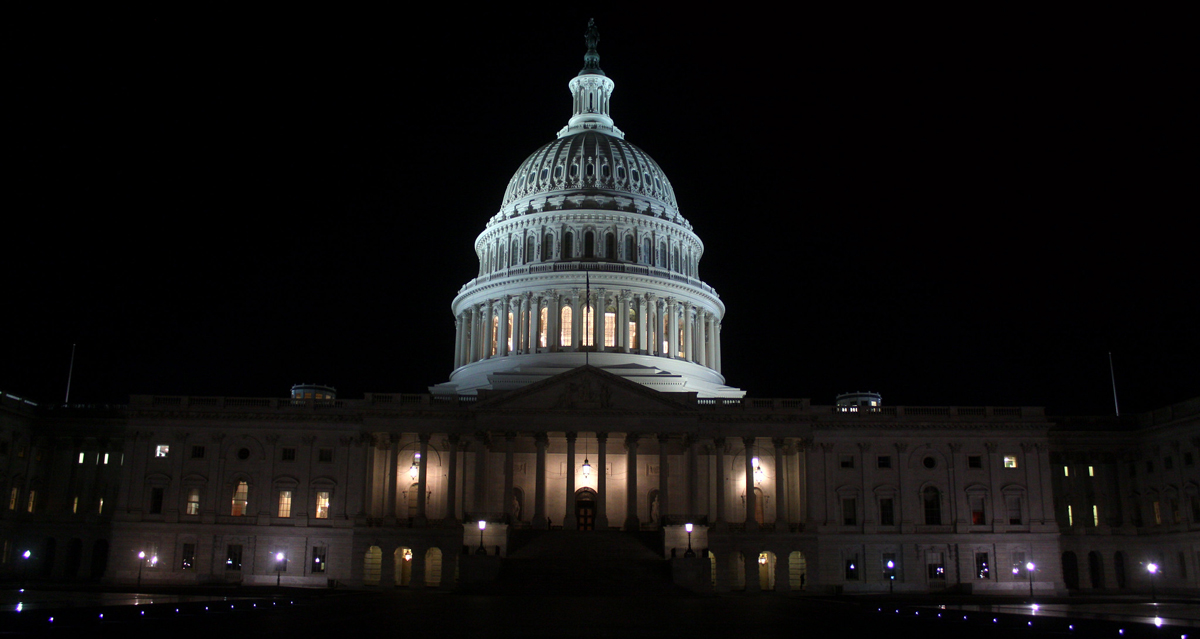
“So, my ask is simple: Do not let the democratic process die in the Free State. Debate it, discuss it, make adjustments if necessary, and put it to a vote,” said Gov. Wes Moore in his fourth State of the State address before a joint session of the Maryland General Assembly on Wednesday, after briefly glancing at Senate President Bill Ferguson regarding their disagreement on redistricting.
Let’s hear what the current members of Maryland’s Congressional delegation have said about the congressional district map created by the 2025 Governor’s Redistricting Advisory Commission.
Rep. Jamie Raskin (D-MD-8 since 2017) sent his letter on Feb. 9 to Maryland Senate members, urging them to approve a new redistricting map. He stated, “Since coming to Congress, I have championed every proposal we have ever advanced to mandate independent, nonpartisan redistricting commissions, such as Congressman John Sarbanes’ ‘For the People Act,’ which passed the House of Representatives in 2021, and last year’s Redistricting Reform Act of 2025.”
Every proposal?
Raskin and the other seven Maryland representatives are not among the 55 co-sponsors of the Redistricting Reform Act of 2025, introduced by Rep. Zoe Lofgren (D-CA-18).
Additionally, they have chosen not to co-sponsor H.R. 4889, introduced by Rep. Kevin Kiley [R-CA-3], which seeks to ban “mid-decade” congressional redistricting nationwide.
Flashback: In September 2017, Raskin and Congressman Andy Harris (R-MD-1) joined a bipartisan coalition of 34 current and former members of Congress in submitting an amicus brief to the U.S. Supreme Court. The brief was filed in the Wisconsin case Gill v. Whitford, which could prevent undemocratic partisan gerrymandering of political districts.
However, Raskin said he’s temporarily abandoned those plans, so we’ll learn what he intends to do about gerrymandering after the 2026 election.
Rep. Steny Hoyer (D-MD-5 since 1985) told Bloomberg Government on Feb. 5 that Maryland should move forward with a new congressional map that could threaten the state’s only Republican in Congress.
Flashback: “Now let me make it clear, I am a serial gerrymanderer,” Hoyer told The Washington Post on March 21, 2017. “As long as North Carolina, Pennsylvania, Ohio, Florida, Texas, and other states that I could name pursue partisan redistricting, there’s no reason to expect that those of us who are in Democratic states won’t do so as well. But what we ought to have is a national mandate that redistricting is to be done in a fair, balanced way through nonpartisan commissions.”
Rep. Kweisi Mfume (D-MD-7 since 2020) has primarily focused his public statements on his re-election campaign and legislative priorities, rather than on the proposed mid-cycle congressional map, since his current seat in Maryland’s 7th District is not the main target of the proposed changes.
Flashback: Mfume told a WBAL radio host in November 2021 that he would not support an 8-0 outcome. He said, “If it were the other way around, and Democrats were one-third of the population, and they put forth maps or started moving toward an 8-0 representation, we’d be jumping up and down in arms.”
Rep. Glenn F. Ivey (D-MD-4 since 2023) told Punchbowl News on November 6 that he supports the new Maryland congressional map and said he is in favor of “trying to convert [Harris’] seat into a Democratic seat”.
Flashback: Ivey told Maryland Matters in October 2021 that he was running for a congressional seat regardless of the outcome of the redistricting process. He said, “Wherever they draw the lines, we’re going to have high name recognition and a strong positive-to-negative ratio as well, in terms of people liking the work that I’ve done and the way that I’ve gone about doing it.”
Rep. Sarah K. Elfreth (D-MD-3 since 2025) stated via Facebook on January 26, “I wanted you to hear this directly from me: while I don’t have a vote on redrawing Maryland’s congressional maps, I am ready to run in, win in, and serve in any district the General Assembly draws.”
Flashback: In the 2018 Maryland League of Women Voters Guide, Elfreth, then a State Senator, answered the question on redistricting.
“An open, free, and fair democracy is a tenet of who we are as a People. A crucial element to that process is maintaining voting districts that accurately represent the community. I support non-partisan redistricting as a tool to protect the integrity of our democracy.”
Rep. John A. Olszewski, Jr. (D-MD-2 since 2025) told the Baltimore Sun on January 21, “People should choose their politicians — not the other way around. … We can and should have [redistricting) reform implemented on the national level—and I fully support legislation to do that.”
Oddly, five days later, on January 28, Olszewski announced support for the Redistricting Reform Act of 2025 (H.R. 5449), a federal bill aimed at ending partisan gerrymandering nationwide.
Rep. April McClain Delaney (D-MD-6 since 2025) has not publicly taken a clear position either in support of or against the details of the proposed 2025 Maryland congressional map.
Flashback: During her 2024 campaign, McClain Delaney expressed her support for requiring states to use independent redistricting commissions to draw congressional districts.
Rep. Andrew P. Harris (R-MD-1 since 2011) issued a blunt warning to Gov. Wes Moore’s ongoing redistricting efforts: “See you in court, Wes!”
Sen. Chris Van Hollen (D-MD since 2017) told Punchbowl News on November 6 that he strongly supports Gov.Wes Moore’s decision to redraw Maryland’s congressional districts, stating, “I’m in favor of moving forward with redistricting, so I’m with the governor.”
Flashback: On June 28, 2010, Van Hollen became a co-sponsor of the John Tanner Fairness and Independence in Redistricting Act, which would require each state to establish an independent, bipartisan redistricting commission to redraw congressional districts every 10 years. These districts should reflect contiguous communities and replace gerrymandered districts that favor partisan seats. (This legislation died in the committee during the Obama administration.)
Sen. Angela Alsobrooks (D-MD since 2025), who serves as chair of the Governor’s Redistricting Advisory Commission, strongly defended the proposed 2025 congressional map as a necessary response to national political trends. She told Punchbowl News, “We just want to make sure at all times that we have fair elections and that the map is a fair map. This is about bringing together various stakeholders, and making sure that Maryland is doing everything it can to preserve the voting rights of our own constituents.”
Flashback: On her 2024 campaign website, Angela states that she would support the Freedom to Vote Act, which expands voting rights, reforms campaign finance laws, bans gerrymandering, and strengthens ethics laws for all federal officeholders.
Maryland’s candidate filing deadline is Feb. 24, with the primary scheduled for June 23.



Recent Comments