
The following column appears in the October issue of The Business Monthly serving Howard and Anne Arundel counties.
After Democrat Vanessa Atterbeary won the June 23 primary for Howard County executive, it looked like she had a free ride to her December swearing in. No Republican had filed for the office.
Then along comes Nater Kane whom the Green Party nominated for county executive in July.
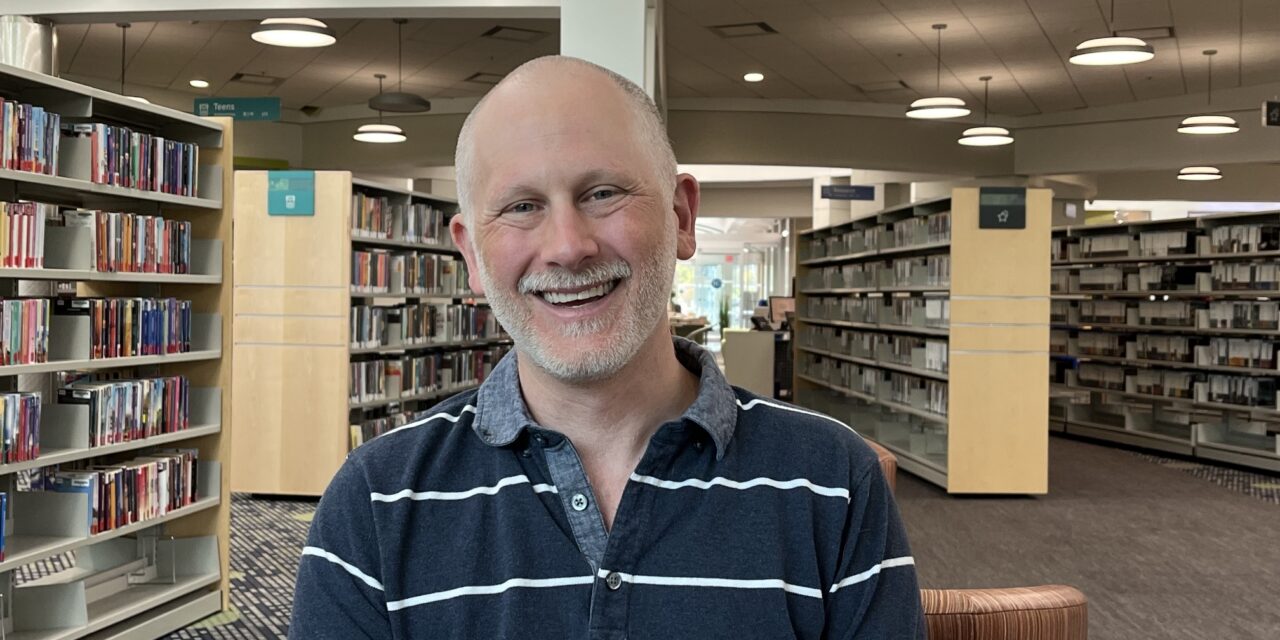
“After I saw the way the Democratic primary played out, something smelled bad,” said Kane, 48, in an interview. Like Atterbeary, he grew up in Howard County and attended public schools here. He is a software engineer who lives in Ellicott City.
Only registered Democrats making up 55% of the electorate here could vote in the party primary. Most of them did not vote. Kane points out that meant that Atterbeary was going to get the top job in the county with the support of just 9.5% of county voters.
“That means 45% of all registered voters are fundamentally disenfranchised … That’s not democracy for somebody to go unchallenged,” said Kane. He particularly didn’t like the fact that unlike her three Democratic opponents who used public campaign finance, limiting contributions to $300, Atterbeary accepted large donations from businesses.
“It is the standard way of having those who have money and influence in business before government to then pay for who’s going to be running that government,” Kane said. “I think we’re better than that and deserve better than that.”
Kane had to switch his registration from unaffiliated to the left-leaning Green Party, in which he had registered in the past. Since he hadn’t filed to run in February, like the traditional party candidates, he also doesn’t qualify for public financing.
Rather than Maryland’s closed primaries, Kane favors a single election with ranked choice voting where all the candidates regardless of party run on a single ballot in which all voters can participate.
Raise the minimum wage
“We have a minimum wage up to $16 an hour” in Howard County, he said. “Big deal. You need $34 an hour in order to live here. How do you square that” with a county executive position that will be paid $250,000 a year? Kane favors lowering the executive’s salary, though that’s not permitted by law during the term of the current office holder.
Kane supports making the county’s minimum wage at least $30 an hour. “How can we have conversations about affordability when we won’t demand people are paid anything close to even approaching what a living wage is?”
Kane is opposed to the emphasis on surveillance cameras that has come to dominate policing. “Surveillance doesn’t make us safer, but it’s a great marketing line that the companies that develop these systems use to sell it,” Kane said. The hundreds of cameras on poles, police cars, traffic lights and school buses are no substitute for real police work, he said.
“If we’re gonna have these cameras, they should just be public. Anybody should be able to go and see everything that’s happening and log in … Or we don’t have them at all. Because they don’t help solve crime. That’s propaganda. That’s PR.”
Kane is also opposed to police officers permanently stationed in public schools, saying they are no substitute for a regular disciplinary process because “young people do stupid things.”
“In 2025, 54 kids were arrested in Howard County schools, 96% of them were people of color. That does not represent the demographics of this county.”
Kane is unabashedly progressive, but that hasn’t helped him gain the help of progressive groups he’s approached once they find out he’s running against a Democrat.
As of Aug. 18, the most recent filing deadline for campaign fundraising and spending, Kane had raised less than $1,000. Atterbeary had raised close to $1.4 million during this three-year election cycle, but she had only $34,000 left in her bank account. She does have major fundraising events planned. Her campaign has yet to acknowledge Kane.
Free rides
Kane also objected to the number of candidates on Howard County ballots who are running unopposed. These include all the countywide courthouse offices, all Democrats – State’s Attorney Rich Gibson, Clerk of Court Jen Terrasa, Register of Wills Byron Macfarlane and Sheriff Marcus Harris. Two of the three Democratic state senators have no opponent – Clarence Lam in District 12, Guy Guzzone in District 13.
The Democratic delegates in Districts 12 and 13 have only token opposition. In two-member District 12A, West Columbia, Republican Frank Glover is on the ballot against incumbent Dels. Jessica Feldmark and Terri Hill. Glover’s campaign reported raising and spending no money. In District 13, a three-member district, only one Republican, Mark Fisher, is running for one of three seats. (Fisher is not the veteran Calvert County delegate of the same name who had caused a storm in May when he accused Howard County Del. Chao Wu of being a potential agent of the Chinese Communist Party.)
Fisher has raised just $1,250 in a district where unopposed Sen. Guzzone, chair of the Budget and Taxation Committee, one of the top 10 campaign fundraisers in Maryland (1.1 million this cycle) spends tens of thousands on his ticket mates, Dels. Pam Lanham Guzzone (his ex-wife) and Gabriel Moreno (appointed to replace Atterbeary), and newcomer Amy Brooks.
For the five-member County Council, four of the five Democrats are running unchallenged: Kevin Chin in District 1 (Ellicott City-Elkridge); Jessica Nichols in District 2 (East Columbia-Jessup), incumbent Christiana Rigby in District 3 (East Columbia to Laurel), Janssen Evelyn in District 4 (West Columbia-Maple Lawn).
Republicans left in Western Howard
Only in Western Howard County where the Republican Party is not quite dead do Democrats face any serious opposition. District 5 Council candidate Cat Carter is the only Democrat on the Howard County ballot to have both a primary opponent and a general election opponent. The seat is currently represented by David Yungmann, the county’s only surviving elected Republican.
Carter is being challenged by Republican Ryan O’Connor, a Howard County native and finance professional who has raised $93,000 and has $70,000 left in his coffers for the final election push. That’s over twice as much as Carter’s $32,000 in the bank, who is taking public financing and has raised $55,000. Carter is depending on a heavy calendar of door-knocking amid the long driveways and big lots in the western county.
The Democrats currently representing western Howard and a slice of Montgomery County in Legislative District 9 also face Republican opposition. Sen. Katie Fry Hester has established herself as one of the General Assembly’s experts on cybersecurity, data centers and utility costs. If money is any measure and it is in a spread-out district where retail campaigning is hard, Fry Hester has raised $536,000 in the last three years and has $349,000 left in the bank. That’s 23 times more than her GOP opponent, Ben Hightower, has left.
In two-member District 9A, Dels. Chao Wu and Natalie Ziegler also have substantial financial advantages over their Republican opponents, Fitzgerald Mofor and Spencer Rhoda, who both hail from Montgomery County. The independent running for delegate, Saif Rehman, has raised less than $1,000. District 9B Del. Courtney Watson has no general election opponent after easily clobbering primary opponent Abdun Martin with a whopping 83% of the vote.


Recent Comments