
By Howard Lee Gorrell
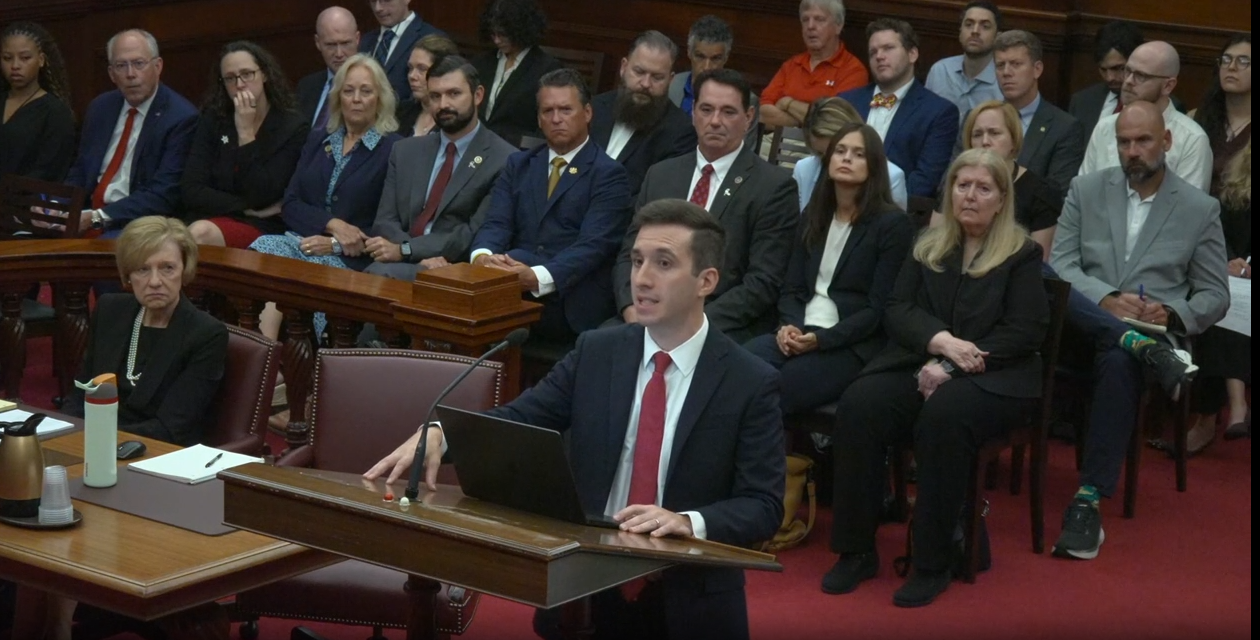
On Thursday, the Supreme Court of Maryland closed the curtain on the wild “2026 Maryland Mid-Decade Redistricting” show by ordering that Question 3 remain on the November 2026 general election ballot and directing the State Board of Elections to rewrite the text of Question 3.
“Did the Democrats or Republicans start the gerrymandering fight?” is the obvious question many people are asking: Who started it?
Most media suggest that Republican President Donald Trump started the mid-decade redistricting fight. However, I see it differently because many overlook the earlier political moves and court rulings that set the stage for this ongoing battle.
It is believed the fight began on November 5, 2013, when Steve Shapiro, a future student at American University’s Washington College of Law and a pro se litigant, filed an anti-gerrymandering complaint in the U.S. District Court for the District of Maryland (Shapiro v. McManus) challenging Maryland’s 2011 congressional redistricting plan. The case reached the Supreme Court in 2015, where the Court unanimously ruled that Shapiro was entitled to a three-judge district court to hear his constitutional challenge. Although the Supreme Court did not decide the merits of partisan gerrymandering in this case, its decision reinforced that constitutional challenges to redistricting deserved a proper hearing. The Shapiro decision helped open the door to later lawsuits and signaled that the courts could play a pivotal role in the ongoing fight over political maps.
President Donald Trump publicly urged Republican-led state legislatures to pursue mid-decade redistricting, especially after the Supreme Court’s 2019 Rucho v. Common Cause decision, which held that federal courts cannot hear partisan gerrymandering claims and left such disputes to state courts and legislatures.
This Rucho decision prompted 10 states to “knock over their dominoes” by adopting new congressional maps outside the regular post-census cycle. In this context, any state that changes its redistricting plan mid-decade can trigger a chain reaction, prompting other states to follow suit. The list includes Texas (favoring Republicans), California (D), Missouri (R), North Carolina (R), Ohio (R), Utah (D), Florida (R), Louisiana (R), Alabama (R), and Tennessee (R).
Maryland (D) joined 6 states that failed to knock over dominoes: Colorado (D), Indiana (R), Kansas (R), New York (D), South Carolina (R), and Virginia (D). In these states, mid-decade efforts to redraw congressional maps stalled for a mix of reasons, including political stalemates, state court rulings that blocked changes, divided control between branches of government, and strong public and institutional resistance to revisiting the maps before the next census.
The Rucho case stems from North Carolina’s 2016 congressional map, drawn by the Republican-controlled legislature. The 2016 case consolidated two lawsuits: one filed by Common Cause and the North Carolina Democratic Party, and the other by the League of Women Voters of North Carolina.
While Rucho definitively ended federal judicial oversight of partisan gerrymandering, League of United Latin American Citizens v. Perry (2006) primarily addressed mid-decade redistricting and racial gerrymandering. In that case, the Supreme Court ruled that the Constitution does not bar mid-decade map changes.
When the Supreme Court of the United States (SCOTUS) issued its landmark 2019 decision holding that partisan gerrymandering is a nonjusticiable political question, it chose Rucho v. Common Cause as the lead case and issued a single, consolidated opinion. The Court decided Lamone v. Benisek concurrently, under the umbrella of the Rucho opinion.
Lamone was a major Maryland congressional redistricting case that stemmed directly from Shapiro v. McManus.
It is crystal clear that Maryland, not Texas, triggered the Mid-Decade Redistricting Battle. Remember, the Shapiro complaint was filed in 2013, while the Rucho complaint was filed in 2016. Texas governor signed the redistricting law in 2025.
However, some political analysts might disagree, arguing that the 2013 and 2016 cases were routine legal challenges to the maps drawn immediately after the 2010 decennial census. They did not reflect states proactively discarding active maps mid-decade to gain partisan advantage. You can decide which theory is correct.
Therefore, it is time to urge all Maryland legislators to support the passage of the Redistricting Reform Act of 2025. This primary standalone federal bill requires all states to use independent, nonpartisan commissions to draw congressional maps.




Recent Comments