
Here’s a statistic that routinely captures the attention of campaign activists.
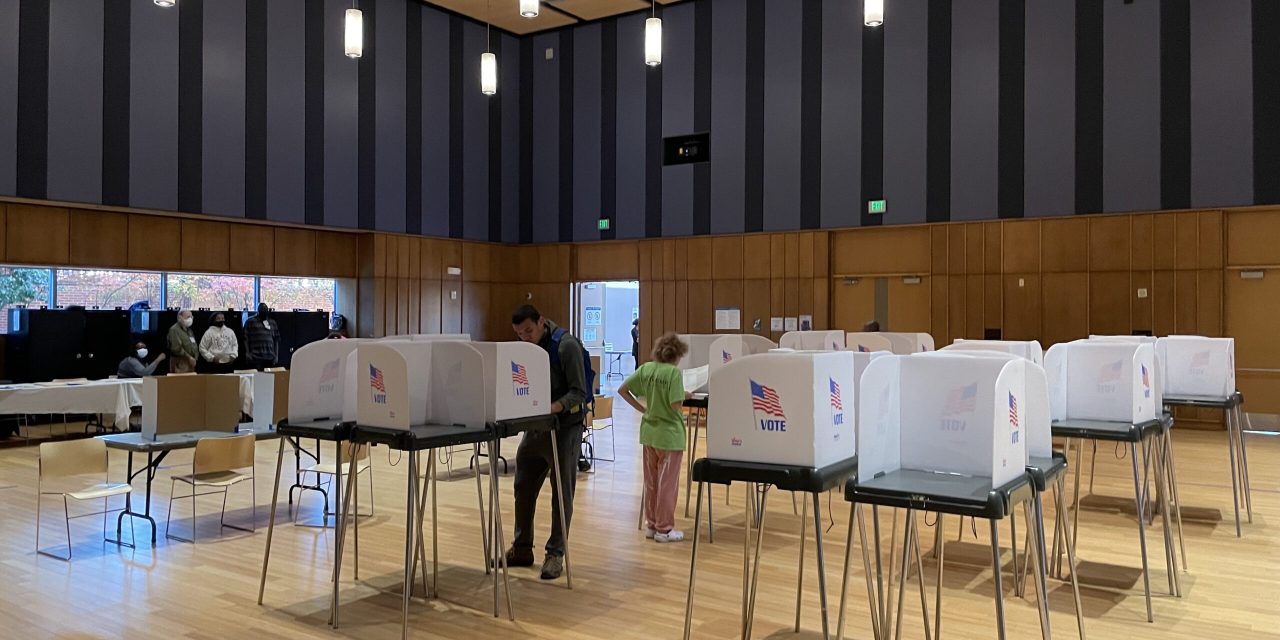
In Maryland’s last three gubernatorial primaries, 2014, 2018, and 2022, only about one-quarter of registered voters participated. Roughly three out of every four registered voters stayed home. The percent is the same for both parties.
That is not unusual. Presidential election turnout regularly reaches 60-67% of eligible voters. Midterm elections often attract 45-50 percent. But primary elections are different. Depending on the state and the office, turnout frequently falls between 15 and 30%. In many local races, participation is even lower.
Yet these low-turnout contests often determine who will ultimately hold office.
In heavily Democratic jurisdictions, the Democratic primary frequently decides the winner. In heavily Republican jurisdictions, the Republican primary serves the same role. The general election becomes little more than a confirmation vote.
That raises an important question. Who are the voters making these decisions?
Political scientists have spent decades trying to answer that question. Five major studies published over the last 15 years provide a remarkably consistent answer.
Primary voters are not representative of the general electorate
The first finding is the most important: primary voters are not representative of the electorate.
A 2017 study by Brian Schaffner and his colleagues found that many citizens who regularly vote in November intentionally skip primary elections. They are not blocked from voting. They do not view primaries as important enough to justify their effort. Many know less about the candidates. Others believe more politically informed voters should make the decision. Some are not even aware that a primary is taking place.
As a result, primary electorates tend to be older, more politically engaged, more attentive to public affairs, and more ideologically committed than the voters who appear in November.
A primary election is not a smaller version of the general election.
It is a different electorate altogether.
That distinction matters because candidates must first appeal to primary voters before they can appeal to the broader public.
No vast pool of non-voters that could be brought to the polls
The second finding challenges one of the most common assumptions in campaign politics.
Many activists believe there is a vast pool of non-voters waiting to be mobilized. If campaigns knock on more doors, send more texts, or make more phone calls, turnout will surge.
The evidence suggests otherwise.
Kevin Arceneaux and David Nickerson examined eleven voter mobilization experiments and found that turnout efforts work best on people who are already close to voting. The easiest voter to mobilize is usually not the person who never votes. It is the person who votes occasionally and needs only a small push to participate.
All this is both encouraging and frustrating to campaigns. Encouraging because outreach works. Frustrating because chronic nonvoters remain difficult to reach.
A third lesson comes from the broader turnout literature. Donald Green, Mary McGrath, and Peter Aronow reviewed decades of field experiments and found that personal contact consistently outperforms impersonal communication. Human relationships matter. Social networks matter. People are more likely to vote when someone they know makes voting seem important.
The fourth lesson is that election rules matter.
Nathan Micatka, Caroline Tolbert, and Robert Boatright found that open and nonpartisan primary systems generally attract higher participation than closed primaries. Competitive races also increase turnout. Voters are more likely to participate when they believe their vote will matter and when they are allowed to participate in the contest.
Finally, Ryan Enos, Anthony Fowler, and Lynn Vavreck found that many turnout efforts disproportionately mobilize people who are already likely to vote. In some cases, mobilization campaigns may widen the participation gap between highly engaged citizens and the rest of the public.
Put all five studies together, and a consistent picture emerges.
- Primary voters are generally more interested in politics than the average citizen.
- Many general-election voters consciously skip primaries.
- Turnout efforts work best on occasional voters rather than habitual nonvoters.
- Personal contact is more effective than impersonal outreach.
- And competitive, accessible elections attract more participation.
End Notes
- Maryland State Board of Elections, 2022 Primary Election Report
https://elections.maryland.gov/press_room/documents/2022%20Primary%20Election%20Report.pdf - Kevin Arceneaux & David W. Nickerson (2009), Who Is Mobilized to Vote? A Re-Analysis of 11 Field Experiments
https://isps.yale.edu/research/publications/isps09-030 - Donald P. Green, Mary C. McGrath & Peter M. Aronow (2013), Field Experiments and the Study of Voter Turnout
https://www.tandfonline.com/doi/abs/10.1080/17457289.2012.728223 - Brian F. Schaffner et al. (2017), Why Don’t People Vote in U.S. Primary Elections? Assessing the Role of Individual-Level Factors
https://www.sciencedirect.com/science/article/pii/S0261379416300695 - Nathan Micatka, Caroline Tolbert & Robert Boatright (2024), All Candidate Primaries, Open Primaries, and Voter Turnout https://commons.clarku.edu/faculty_political_science/19/
Ryan Enos, Anthony Fowler & Lynn Vavreck (2014), Increasing Inequality: The Effect of GOTV Mobilization on the Composition of the Electorate https://www.researchgate.net/publication/271664538_Increasing_Inequality_The_Effect_of_GOTV_Mobilization_on_the_Composition_of_the_Electorate


We need to open the primaries.