

Many B2B companies reach a point where a meaningful share of revenue runs through partners: resellers, distributors, ISVs, brokers, consultants. Early on, the setup works well enough: a shared folder for sales materials, email-based onboarding, deal registration in a spreadsheet.
That arrangement stops working long before most companies recognize it as the problem. Onboarding drags on for weeks. Channel managers chase updates instead of enabling partners to sell. Leads get duplicated or go unassigned. When leadership asks for a view of the partner-generated pipeline, no one can produce a reliable number.
The issue is structural. Disconnected tools generate manual work at every stage of the partner lifecycle, and this work doesn’t scale. What growing companies need is a centralized PRM system that connects the full partner lifecycle inside the same platform they use to run direct sales.
Why Partner Programs Become Hard to Manage at Scale
The friction in most partner programs builds slowly and then compounds. A handful of resellers can be managed with email threads and check-ins. Fifty, across multiple product lines, tiers, and regions, cannot.
The pressure points are predictable: slow access to training and sales materials, manual deal registration that creates delays and channel conflict, limited pipeline visibility, scattered enablement content. Underneath all of it is a lifecycle problem: recruitment, onboarding, enablement, deal registration, and co-selling are interconnected. A breakdown at one stage affects every stage downstream.
What Salesforce Partner Cloud Brings to Partner Relationship Management
Salesforce Partner Cloud consolidates the core components of a PRM program natively within Salesforce, replacing the scattered mix of portal tools, deal tracking systems, and standalone reporting that most companies are working around.
The platform comes in two tiers: Partner Relationship Management (PRM) for foundational partner portal and deal tracking capabilities, and Partner Ecosystem Management (PEM), which adds enablement programs, incentive management, and deeper automation. Because it’s built natively on Salesforce, it connects directly to Sales Cloud, Revenue Cloud, and Slack. A deal registered by a reseller appears in the CRM pipeline automatically, with no manual entry required.
Key Partner Processes Companies Should Automate First
Not every company needs to automate the entire partner lifecycle in phase one. Start with the processes that most directly affect revenue and engagement.
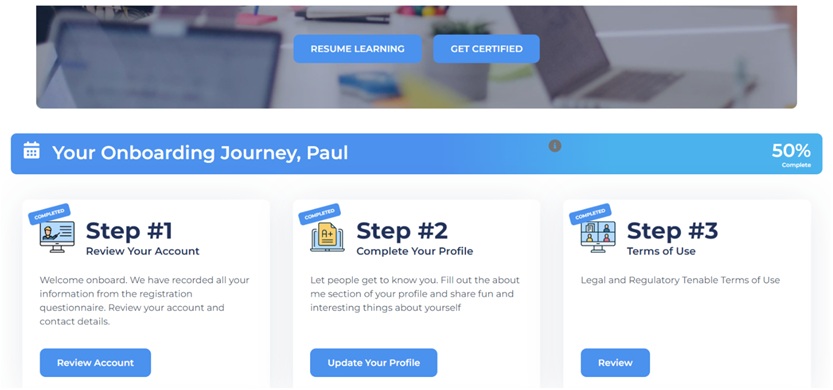
- Partner onboarding is usually the highest-leverage starting point. The faster a new partner moves from a signed agreement to active selling, the sooner they contribute to the pipeline.
Courtesy photo
- Deal registration and lead distribution come next. Structured workflows eliminate manual review, route approvals correctly, and flag duplicates automatically.
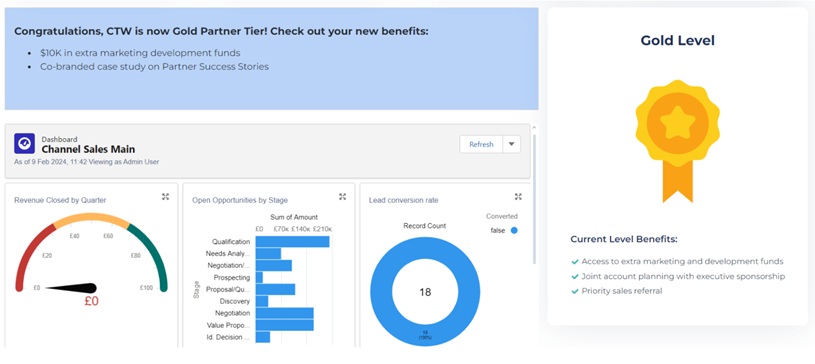
- Co-selling collaboration, MDF processing, and commission visibility follow as the program matures.
The underlying principle: a good Partner Cloud implementation begins with understanding which processes generate the most friction today, not with designing a portal and filling it with features.
Why Partner Self-Service Matters for Channel Growth
Partners behave like customers in one important respect: if completing a routine task requires opening a ticket or waiting on a channel manager, many simply won’t do it.
A self-service portal changes that dynamic. When partners can log in, check deal status, download current materials, view commission balances, and submit MDF requests without waiting for a response, they stay engaged. Salesforce Partner Cloud delivers this through a branded portal built on Experience Cloud, connected directly to the same CRM data used internally, so partners are always working from current information, not a stale export.
The Role of AI and Agentforce in Modern Partner Management
AI in partner management delivers value when it’s solving specific, well-defined problems, not deployed as a general capability. Within Partner Cloud, Agentforce can answer common partner questions directly in the portal, surface disengaged or high-potential partners for channel managers, and support deal creation by helping partners build quotes without navigating complex product catalogs.
The key constraint: it works best when the underlying data is clean and processes are already defined. Agents on top of inconsistent data amplify existing problems, not solve them.
When It Makes Sense to Work with a Salesforce Partner Cloud Implementation Partner
Partner Cloud implementations vary considerably in complexity. A company with a single partner type, a simple deal registration workflow, and a clean Salesforce org might be able to handle configuration internally with an experienced admin. Most mid-market companies with a growing ecosystem don’t fall into that category.
For B2B companies that need to connect partner onboarding, deal registration, enablement, co-selling, and performance reporting inside Salesforce, working with an experienced Salesforce Partner Cloud implementation partner can help reduce implementation risks and align the PRM portal with real channel sales processes.
Practical Checklist Before Starting a Partner Cloud Project
Before beginning a Partner Cloud implementation, the following steps help set the project up for a cleaner, faster rollout.
Define partner types and priority use cases.
Start by clarifying which partner types the program needs to support (resellers, ISVs, distributors, service partners), and which processes matter most in the first phase.
Map the current partner lifecycle.
Document how partners are recruited, onboarded, enabled, and managed today. Identify every point where a manual step, spreadsheet, or email is involved.
Identify manual handoffs and bottlenecks.
Look specifically at where data moves between systems or people without automation. These are both the highest-friction points and the most impactful places to start.
Decide which processes to automate first.
Not everything needs to be built in phase one. Prioritize onboarding, deal registration, and lead distribution. These are the processes with the most direct revenue impact.
Prepare partner account, role, and access structure.
Decide how partner users will be organized, what each role can see and do, and how tier or region-based permissions will be managed.
Audit existing enablement content.
Review what sales materials, training resources, and product documentation currently exist, assess currency and quality, and determine what needs to be created or updated before launch.
Define deal registration and lead sharing rules.
Establish clear criteria for how deals get registered, how conflicts are handled, and how leads are assigned or distributed.
Plan dashboards and partner performance KPIs.
Determine what channel managers and leadership need to see (pipeline by partner tier, time to first deal, deal registration volume), and build the reporting structure before data starts flowing.
Decide whether AI support is in scope for phase one.
If partner self-service and automated support are part of the roadmap, plan for Agentforce setup early, since it depends on clean data and structured content in the knowledge base.
Launch with a pilot group before scaling.
Run the initial deployment with a small group of active partners, gather feedback, and refine before opening access to the broader ecosystem.
Conclusion
Partner programs don’t fail because the products are weak or the partner relationships are bad. They struggle because the processes that support those relationships (onboarding, deal registration, enablement, co-selling, reporting) are held together with manual work that doesn’t scale.
Salesforce Partner Cloud gives companies a centralized platform to manage the full partner lifecycle inside Salesforce, connect partner activity to internal CRM data, automate the workflows that currently consume channel managers’ time, and give partners a self-service experience that keeps them engaged and productive.




Recent Comments