
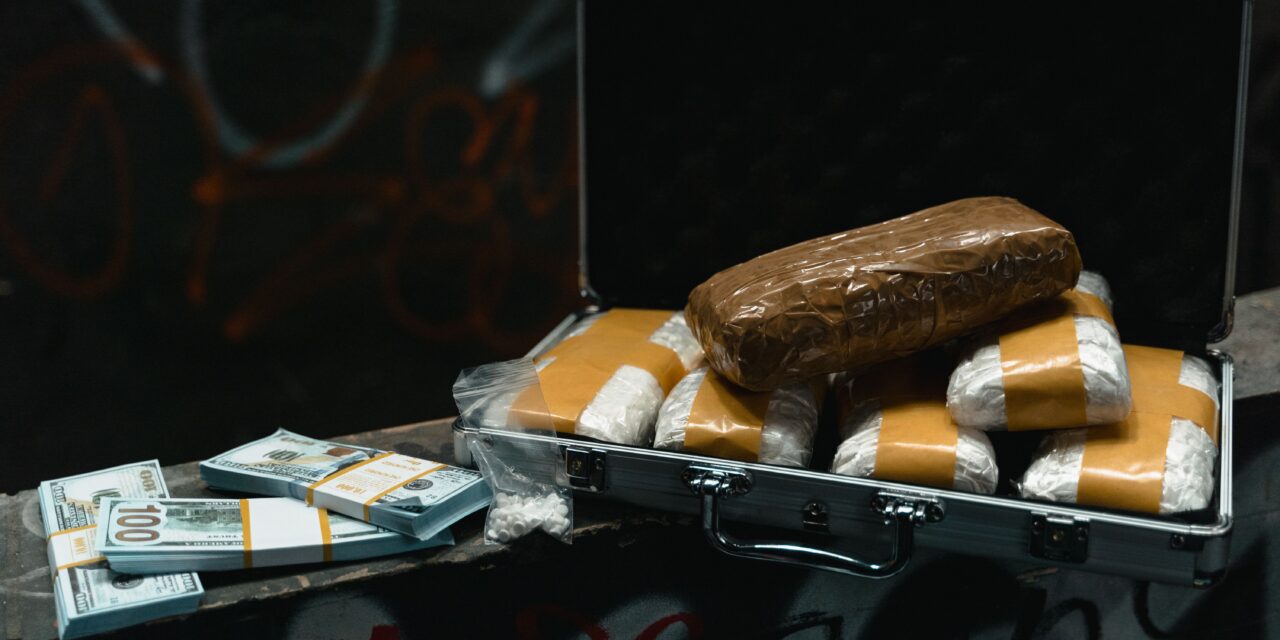
When federal law enforcement agencies intercept illicit narcotics, precursor chemicals, or unapproved pharmaceuticals at U.S. ports of entry, the seized materials enter a tightly regulated evidentiary and destruction lifecycle. Governed by a combination of federal statutes, forensic protocols, and environmental laws, intercepted substances are protected under a continuous chain of custody.
Substances seized at the border undergo meticulous physical logging, quantitative chemical testing, secure vault storage, prosecutorial authorization, and final destruction. Border control authorities include U.S. Customs and Border Protection (CBP), Homeland Security Investigations (HSI), and the Drug Enforcement Administration (DEA). Their primary mandate is balancing statutory evidentiary requirements with the need to eliminate the security risks of long-term contraband stockpiling.
The Border Seizure-to-Destruction Lifecycle
From initial interdiction at a border checkpoint to final disposal, seized drug contraband moves through five operational phases:
- Interdiction & Field Documentation: Intercepted materials are logged, weighed, photographed, and packaged in tamper-evident containers with unique evidence tracking numbers.
- Forensic Sampling & Chemical Analysis: Forensic chemists extract representative samples to identify active chemical entities, calculate purity levels, and determine precise net weight for criminal charges.
- Secure Vault Holding & Threshold Segregation: Bulk drug evidence is transferred to reinforced DEA or federal evidence vaults. Statutory thresholds dictate how much material is retained for trial versus cleared for early destruction.
- Prosecutorial Approval & Destruction Authorization: Federal prosecutors (U.S. Attorneys) issue formal written consent to destroy bulk quantities once evidentiary requirements are satisfied.
- Certified Destruction: Authorized materials are rendered permanently non-retrievable via high-temperature incineration or certified on-site chemical digestion and mechanical pulverization.
Technical On-Site Destruction Solutions
Moving massive quantities of seized narcotics from secure federal vaults to off-site incineration facilities creates significant logistics risks, including potential interception, high-risk armed transit operations, and complex multi-agency handling. To minimize these vulnerabilities, federal law enforcement agencies increasingly leverage advanced on-site destruction technologies.
Government and law-enforcement agencies can utilize specialized on-site narcotics destruction services from licensed providers like GAIACA to satisfy federal requirements.
GAIACA’s destruction methodology relies on high-capacity mechanical pulverization followed by neutralization with a proprietary chemical solution. This process permanently alters active chemical compounds, rendering controlled substances non-retrievable without requiring bulk transport off federal premises.
By processing contraband on-site at evidence facilities, agencies mitigate the security risks associated with stockpiling and transportation while maintaining chain-of-custody documentation (including transfer manifests and official Certificates of Destruction) to support internal audits and judicial review.
Bedside Field Interdiction vs Bulk Evidentiary Retention
To understand how federal law manages large-scale border seizures, consider a typical interdiction scenario at a Commercial Import Facility:
The Scenario
CBP officers at a port of entry discover a concealed shipment containing 500 kilograms of fentanyl powder inside a commercial transport vehicle.
- Field Handling: Officers immediately wear specialized Personal Protective Equipment (PPE) and use handheld Raman spectrometers for preliminary identification. The shipment is placed into tamper-evident containers sealed with serialized lock tags.
- Forensic Analysis: Under 28 CFR § 50.21, federal forensic scientists perform representative sampling to establish chemical identity and concentration.
- Bulk Evidentiary Thresholds: Rather than preserving all 500 kilograms for trial, federal law under 28 CFR § 50.21(d) dictates that agencies retain only the statutory “threshold amount” (for fentanyl, 800 grams of a mixture or 200 grams of an analogue) plus representative samples and high-resolution photographic/videographic evidence.
- Destruction Authorization: Within 60 days of written notice to the U.S. Attorney’s Office, the excess ~499 kilograms are cleared for bulk destruction. This drastically limits the volume of lethal synthetic opioids held in government storage while preserving admissible evidence for court.
Legal and Statutory Frameworks Governing Seized Contraband
Federal agencies handle seized drugs under a strict hierarchy of federal regulations, statutory destruction mandates, and evidentiary rules:
| Regulation / Statute | Governing Body | Statutory Mandate & Operational Impact |
| 28 CFR § 50.21 | Department of Justice (DOJ) | Destruction of Contraband Drug Evidence: Establishes precise rules for destroying bulk seized drugs prior to trial. Defines statutory threshold limits that must be retained as evidence (e.g., 2 kg for heroin, 10 kg for cocaine) while allowing excess amounts to be legally destroyed. |
| 21 CFR Part 1317 | Drug Enforcement Administration (DEA) | Disposal of Controlled Substances: Sets the standards for destroying controlled substances, defining the non-retrievable standard and requiring two-employee witness verification for all destruction events. |
| 19 U.S.C. § 1607–1609 | U.S. Customs & Border Protection | Seizure & Summary Forfeiture: Authorizes CBP to summarily forfeit and dispose of illegal narcotics, prohibited materials, and unapproved imported drugs seized at borders without lengthier judicial forfeiture proceedings. |
Non-Retrievable Standard and Environmental Considerations
Once prosecutors authorize destruction, agencies must ensure the physical destruction method fulfills both DEA efficacy rules and Environmental Protection Agency (EPA) emissions rules.
The Non-Retrievable Rule
Under 21 CFR § 1300.05, seized drugs must be rendered permanently non-retrievable. The drug’s physical or chemical condition must be irreversibly altered so that it cannot be recovered, reconstructed, or re-engineered into an active controlled substance or analogue.
Destruction Technologies
- High-Temperature Thermal Incineration: Industrial incinerators operating at temperatures exceeding 1,800°F (1,000°C) break down complex organic drug molecules into inert ash, carbon dioxide, and water vapor. Incinerator facilities must utilize scrubbers to capture hazardous atmospheric emissions (e.g., vaporized synthetic opioids or halogenated compounds).
- Chemical Neutralization & Mechanical Pulverization: Mobile processing units combine mechanical shredding with liquid chemical digestion reagents. The active pharmaceutical ingredients are denatured at a molecular level, turning the contraband into a non-hazardous, unrecoverable sludge suitable for licensed industrial waste management facilities.
Residual Waste Governance
Disposing of combustion ash, shredded packaging, or neutralized slurries must comply with the Resource Conservation and Recovery Act (RCRA). If packaging contains toxic residue or halogenated reagents, the post-destruction waste stream must be handled as regulated industrial waste rather than municipal garbage.
Legitimate Pharmaceuticals Intercepted at the Border
Not all medications intercepted at the border are street drugs. Customs officers regularly seize commercial shipments of foreign prescription drugs, counterfeit over-the-counter products, or unapproved medical imports violating the Federal Food, Drug, and Cosmetic Act (FD&C Act) (21 U.S.C. § 381).
- Administrative Forfeiture: Unapproved or misbranded medications imported without proper Food and Drug Administration (FDA) licenses are refused entry and subjected to administrative destruction.
- Return to Authorized Owners: If an authorized commercial importer demonstrates that a seized shipment satisfies federal importation requirements, FDA/CBP protocols allow the shipment to be released back to the owner rather than destroyed.
Drug Control at the Border Balances Judicial and Vault Risks
The disposition of drugs intercepted at U.S. borders represents a delicate balance between preserving judicial due process and eliminating significant security liabilities. Federal interdiction agencies (including CBP, HSI, and the DEA) must strictly adhere to statutory frameworks like 28 CFR § 50.21 to ensure that illicit substances are accurately documented and forensically verified for court, while preventing evidence vaults from becoming high-risk stockpiles.
Certified non-retrievable technologies (whether through high-temperature incineration or mobile mechanical pulverization and chemical neutralization) guarantee that active compounds cannot be recovered or diverted.




Recent Comments