
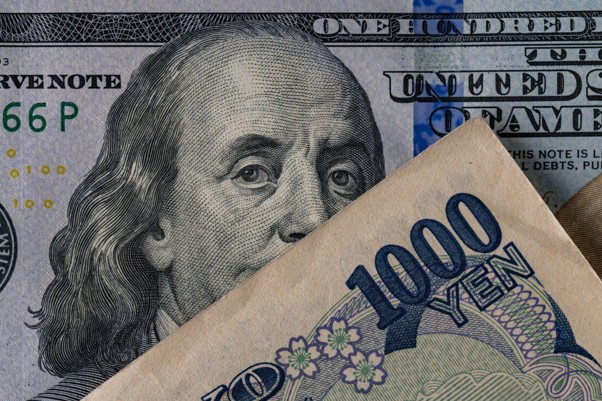
One U.S. dollar now buys roughly 158 Japanese yen, a rate few currency watchers would have predicted a few years ago. The yen has been trading near its weakest level against the dollar in four decades. The slide grew steep enough that Tokyo and Washington recently stepped into the market together.
For Maryland, the exchange rate matters beyond the trading screens. The Port of Baltimore ranks second in the nation for autos and light trucks, handling more than 700,000 of them last year, according to the governor’s office. Japanese brands also loom large in the U.S. car market. The Toyota RAV4 is the top-selling Japanese-brand vehicle and the best-selling SUV in the United States. Shifts in the yen change the cost of imported vehicles, machinery and parts, and that changes the calculations of the businesses that buy them.

Why the Dollar-Yen Pair Draws So Much Attention
The quote shows how many yen one dollar buys. A rising number means a stronger dollar, and a falling one means the yen is gaining ground. USD/JPY is among the most actively traded pairs in a global currency market that turns over roughly $9.6 trillion a day, according to the latest survey by the Bank for International Settlements.
That depth helps explain why the pair is a fixture of retail forex trading, where individuals speculate on exchange rate moves through brokers rather than swapping physical cash. In the U.S., firms offering that service to the public must register with the Commodity Futures Trading Commission and belong to the National Futures Association. Heavy volume does not guarantee calm, however. The yen can swing several percent in a matter of days when the forces below collide.
The Interest Rate Gap Still Sets the Tone
No factor shapes the pair more than the difference between American and Japanese borrowing costs. Investors can borrow yen cheaply and put the money into higher-yielding dollar assets, a strategy known as the carry trade. The wider the gap, the stronger the pull away from the yen.
That gap remains wide even though both central banks are now raising rates. The Federal Reserve, chaired by Kevin Warsh, has lifted its benchmark rate to a range of 3.75% to 4% as energy costs keep inflation elevated. The Bank of Japan spent years holding rates at or below zero and has now raised its policy rate to 1.25%.
A Japanese hike would normally support the yen. Yet when the Bank of Japan made its latest move, the currency slipped. A spread of more than two and a half percentage points still favored the dollar, and Fed officials had just signaled another increase was likely. Currency markets tend to trade the expected path of policy rather than any single decision.
Lessons From the 2024 Carry Trade Unwind
The carry trade can reverse violently, and 2024 offered a vivid example. With the dollar fetching more than 160 yen, the Bank of Japan raised rates, and a weak U.S. jobs report followed soon after. Leveraged positions funded in yen were unwound at speed.
Japan’s Nikkei 225 fell more than 12% in a single session, its largest one-day point drop on record. Within weeks, USD/JPY slid to around 142. The episode showed how quickly a crowded position can turn when both sides of the rate gap shift at once.
Washington and Tokyo Step In
Governments can also move the rate directly. With the yen sliding toward 164 per dollar, Japan’s Ministry of Finance bought yen in coordination with the U.S. Treasury. Officials in both capitals confirmed the operation shortly afterward and said they stood ready to act again, as The Japan Times reported. Joint action of this kind is rare, and the two countries had not bought yen together in decades.
The yen jumped right after the intervention, then gave back part of the gain as the pair drifted toward 158. That supports a view analysts voiced at the time: intervention can interrupt a slide, but rate differentials and economic fundamentals usually set the longer trend.

Oil, Trade and a Less Dependable Safe Haven
Japan imports almost all of the crude it uses, most of it from the Middle East, so oil prices flow straight into its trade accounts. When oil climbs, importers need more dollars to pay for it, and that steady selling of yen weighs on the currency. The conflict involving Iran pushed energy prices higher and, at several points, the yen lower.
That pattern complicates the yen’s reputation as a refuge in times of turmoil. The currency still tends to rally when investors rush to close risky bets, as the 2024 unwind showed, but an energy shock now hits Japan’s economy directly. Trade data can also work in the yen’s favor. When Japan’s latest current account figures beat forecasts by a wide margin, the yen held steady near 158.
Final Thoughts on What Traders Are Watching Next
The Fed and the Bank of Japan meet again within days of each other. After softer U.S. data, futures pricing has moved away from a second straight Fed hike. In Tokyo, the question is whether policymakers keep up the quicker pace of increases they adopted this year.
Add verbal warnings from Japan’s Finance Ministry, the direction of Treasury yields and the price of crude, and the dollar-yen rate becomes a running scorecard of two economies under very different pressures. For Maryland importers, travelers bound for Japan and anyone following the pair, those signals say more than any single forecast.




Recent Comments