
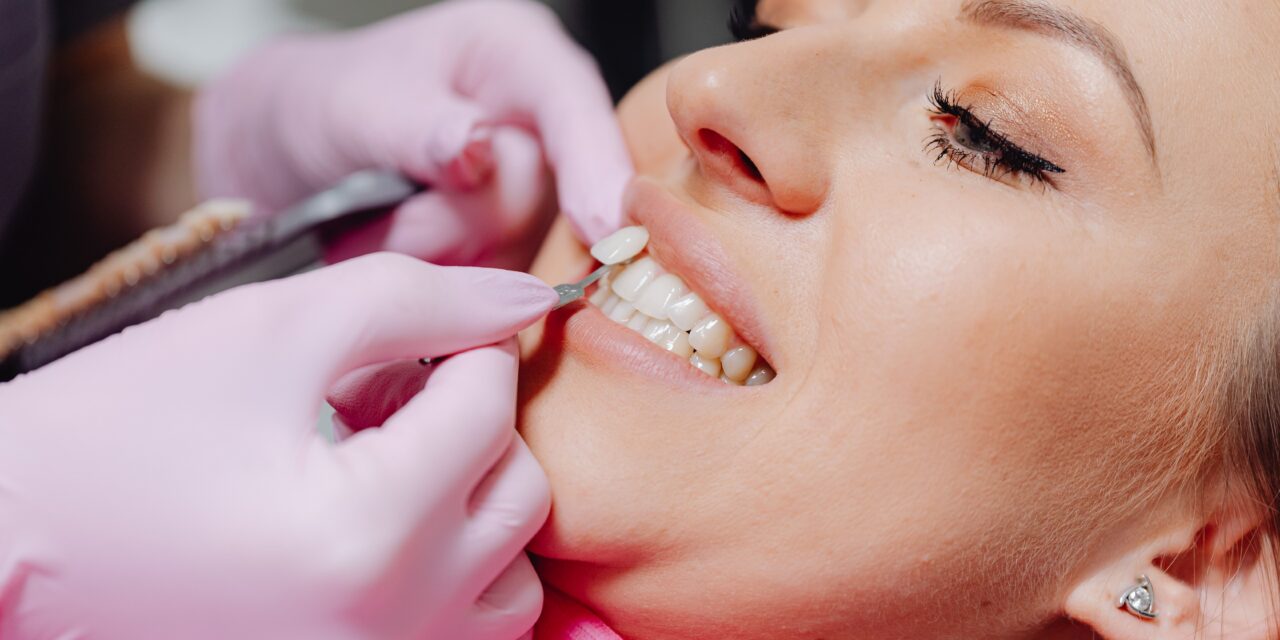
A confident smile has become one of the most requested upgrades in cosmetic dentistry, and porcelain veneers sit at the center of that trend. From Baltimore and Annapolis to Bethesda and Frederick, more Maryland residents are asking their dentists whether thin ceramic shells could fix chipped, stained or uneven front teeth.
Veneers can deliver dramatic results, but they are also a long-term commitment. This guide explains what porcelain veneers are, who makes a good candidate, how the treatment works and what to ask before you book a consultation.
What Are Porcelain Veneers?
Porcelain veneers are wafer-thin, custom-made ceramic shells bonded to the front surfaces of teeth. Most are roughly as thin as a contact lens, typically between 0.3 and 0.7 millimeters. Each one is shaped and shaded to match the patient’s face, gum line and neighboring teeth.
Once bonded, the veneer becomes the visible surface of the tooth. Because dental porcelain reflects light much like natural enamel, a well-made veneer is difficult to tell apart from a real tooth.
Porcelain vs. Composite Veneers
Porcelain veneers offer natural translucency, hold their shade and resist staining well, and they typically last about 10 to 20 years. They usually take two or more visits and are generally replaced rather than repaired if damaged. Composite resin veneers can often be placed in one visit and are easier to patch chairside, but they may dull or stain over time and usually last about 5 to 7 years.
Benefits of Porcelain Veneers
Veneers can address several cosmetic concerns in a single treatment:
- Stubborn discoloration that whitening cannot lift, such as tetracycline or fluorosis stains
- Chips, cracks and worn edges caused by grinding or minor injury
- Small gaps between front teeth
- Mildly crooked or uneven teeth when orthodontics is not preferred
- Teeth that look too short, too small or misshapen
Porcelain is also highly stain-resistant, so coffee, tea and red wine affect it far less than natural enamel.
Who Is a Good Candidate?
The best candidates have healthy gums, enough enamel to bond to and realistic expectations. A dentist will usually treat cavities or gum disease before any cosmetic work begins.
Veneers may not suit people with severe untreated teeth grinding, significant bite problems or heavily weakened teeth. In those cases, a night guard, orthodontic treatment or a different restoration may come first.
Why a Conservative, Biomimetic Approach Matters
Traditional veneer preparation can remove a noticeable layer of enamel, and that enamel never grows back. Biomimetic dentistry takes a different view: restorations should mimic the natural tooth and preserve as much healthy structure as possible. Strong adhesive bonding to enamel lets the tooth and veneer work together, which can improve durability and reduce sensitivity.
Practices that specialize in this philosophy show what conservative cosmetic work looks like in practice. At Dr. Marc Lazare Biomimetic Dentistry and Smile Design, Upper East Side, NYC, Porcelain Veneers are planned around minimal preparation and careful smile design. Dr. Lazare holds Master status in the Academy of General Dentistry and was elected president of the Academy of Biomimetic Dentistry in 2019. For Maryland patients willing to make the trip up the I-95 corridor, his work is a useful benchmark when comparing providers closer to home.
Whoever you choose, ask how much enamel will be removed and whether a minimal-prep or no-prep option suits your teeth.
The Porcelain Veneer Process, Step by Step
Most treatments take two to four weeks from consultation to final bonding.
- Consultation and smile design. The dentist examines your teeth, takes photos and scans, and discusses the shape, length and shade you want.
- Preview or mock-up. Many dentists create a wax model or a temporary trial smile so you can see the result before any tooth is altered.
- Preparation. A thin layer of enamel may be gently reshaped, often under local anesthetic. Minimal-prep cases remove very little.
- Impressions and temporaries. Digital scans or impressions go to a dental laboratory, and temporary veneers protect the teeth meanwhile.
- Bonding. The dentist checks fit and color, then bonds each veneer with adhesive cement and a curing light.
- Follow-up. A short visit confirms that your bite is comfortable and the gums are healing well.
How Much Do Porcelain Veneers Cost?
In the United States, porcelain veneers commonly cost about $1,000 to $2,500 per tooth. Prices vary with the dentist’s experience, the laboratory used, the number of teeth and the region. Because veneers are usually considered cosmetic, dental insurance rarely covers them, although many practices offer payment plans.
Caring for Your Veneers
With good care, porcelain veneers often last 10 to 20 years. Simple habits make a real difference:
- Brush twice a day with a non-abrasive toothpaste and floss daily
- Keep up with professional cleanings and checkups every six months
- Wear a night guard if you clench or grind
- Avoid biting ice, pens, fingernails or opening packages with your teeth
How to Choose the Right Dentist
Veneers are as much an art as a science, so the dentist’s skill shapes the outcome. Before committing, ask:
- How many veneer cases have you completed, and can I see before-and-after photos?
- How much tooth structure will you remove?
- Can I preview my new smile before treatment begins?
- Which dental laboratory do you work with?
- What happens if a veneer chips or loosens?
The Bottom Line
Porcelain veneers can transform a smile with natural-looking, stain-resistant results that last for years. The best outcomes come from careful planning, a conservative approach that protects healthy enamel and an experienced dentist. Whether you stay close to home in Maryland or travel to a specialist in New York, take the time to compare options and ask detailed questions.




Recent Comments