
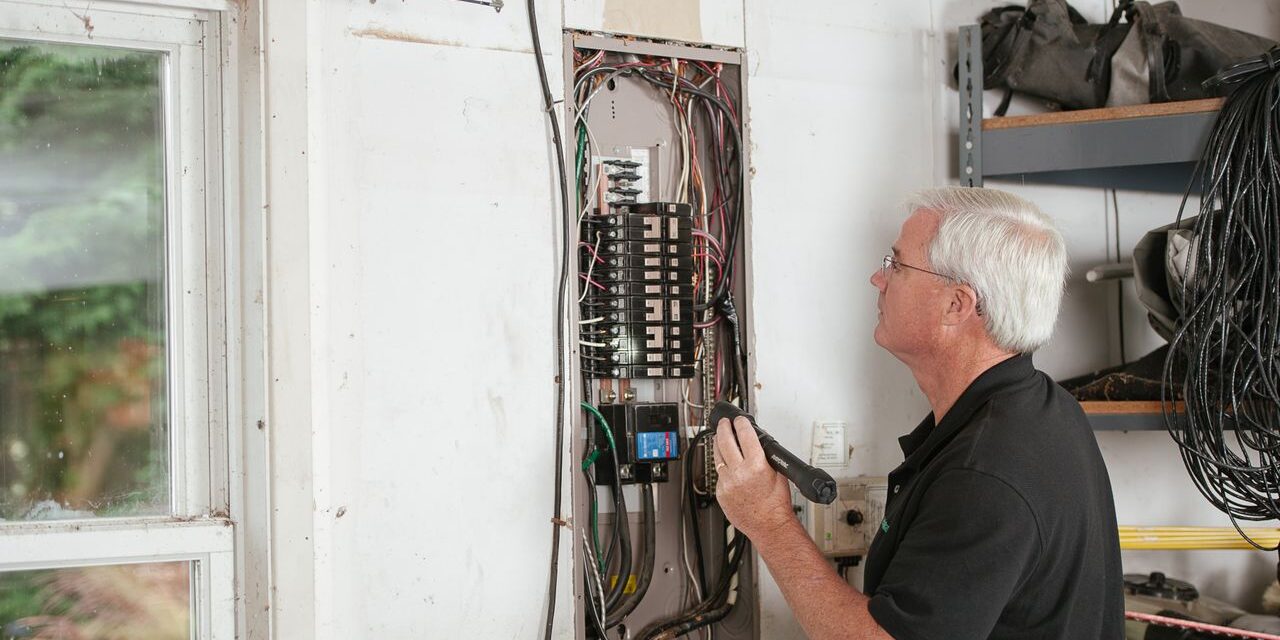
Electrical inspections review wiring, panels, circuits, and related equipment to check for safety and code issues. They may be required for construction, remodeling, service upgrades, or other electrical work.
Electrical Inspections can reveal unsafe wiring, improper connections, overloaded circuits, and work that does not meet local rules. Permit and inspection requirements vary by location, so property owners should check local requirements before starting a project.
Key Takeaways
- Electrical inspections check wiring, panels, circuits, and equipment for safety issues and local code requirements.
- Permits and inspections are often required for panel replacements, service upgrades, new circuits, renovations, and other major electrical work.
- Inspectors commonly review grounding, breaker sizing, wiring methods, circuit protection, and whether the work matches the approved permit.
- Permit rules, fees, inspection stages, and licensing requirements vary by jurisdiction, so homeowners should confirm local requirements before work begins.
When Electrical Inspections Are Required
Local authorities often require inspections when a project includes new wiring, panel replacement, service upgrades, additions, or major renovations. In many areas, an electrical permit must be obtained before covered work begins. One or more inspections may then be required as the project moves forward.
Projects that may require permits and inspections include:
- Installing or replacing an electrical panel
- Adding new circuits or outlets
- Wiring a home addition or remodel
- Upgrading electrical service
- Installing certain hardwired equipment
Smaller repairs may follow different rules, depending on the local authority. A required permit should not be overlooked just because the project seems minor.
Who Can Obtain Electrical Permits?
Permit rules vary by state, county, and city. Some jurisdictions allow homeowners to obtain permits for certain work on their own homes. Others require a licensed electrician or licensed electrical contractor to obtain the permit.
Before work begins, confirm:
- Whether the project requires a permit
- Who can legally obtain the permit
- Which inspections are required
- What permit fees apply
Commercial projects often have stricter licensing rules. Requirements may also depend on whether the work is performed by licensed electrical contractors in that jurisdiction.
Checking these details before starting can prevent delays and unexpected costs. It can also reduce the risk of failing an inspection because the correct permit was never issued.
How the Inspection Process Works
The inspection process usually begins after the permit has been approved and the electrical work reaches a stage that requires review. For many projects, electrical inspectors first check wiring before walls or ceilings are closed.
A final inspection may follow after fixtures, devices, and equipment are installed.
A typical process may include:
- Permit application and approval
- Rough electrical inspection
- Required corrections
- Final inspection
- Permit closure
Larger projects may need several inspections at different stages. The exact sequence depends on local requirements and the type of electrical installation.
Contractors should schedule an inspection only when the electrical work is complete for that stage and easily accessible. Covering wiring before approval can cause delays because inspectors may require opening those areas again.
What Inspectors Typically Review
Inspectors check whether the electrical installation follows local regulations and current safety standards. They may review wiring size, grounding, bonding, panel setup, circuit protection, boxes, outlets, and equipment connections.
They also check whether the work matches the approved permit.
Common issues include:
- Incorrect breaker or wire sizing
- Missing grounding or bonding
- Improper junction box installation
- Unsafe panel connections
- Missing circuit protection
- Work that does not meet the applicable building code
Many local codes are based on the National Electrical Code (NEC), but the adopted edition and local amendments can vary. Cities and states may also add local rules or amendments.
For this reason, code compliance should be based on the rules enforced in the property’s location. A national standard alone does not determine every local requirement.
Working With a Qualified Electrician
Permit and inspection requirements can be difficult to manage during larger projects. Panel upgrades, service changes, and new circuits often involve several technical and administrative steps. A qualified professional can help keep the project on track.
For homeowners planning repairs or upgrades, working with Grounded Electric can help ensure the electrical work is planned with local permit and inspection requirements in mind. A licensed electrician can review the project, identify the necessary approvals, and prepare the work for inspection.
This can also reduce avoidable delays caused by missing documents or incomplete work.
Professional support can be especially useful when a project affects several parts of the electrical system. Clear planning before installation often makes the inspection stage easier to manage.
Common Reasons Inspections Fail
Not every project passes on the first inspection. Inspectors may identify problems that must be corrected before final approval. The permit holder usually needs to fix those issues before requesting another visit.
Common reasons for failure include unsupported wiring, incorrect breakers, missing covers, improper grounding, or unfinished connections.
Older panels may also raise concerns when new circuits are connected to existing equipment. In some cases, the installation may not match the approved plans or permit scope.
After receiving a correction notice, the contractor should review every listed item. Request a new inspection only after all required corrections are complete.
Permit Fees and Scheduling
Permit fees vary by location and project type. Some jurisdictions base fees on project value, service size, or the number of circuits. Extra charges may apply when repeated inspections are needed.
Scheduling rules also differ by location. Some departments use online systems, while others accept requests by phone or contractor portal. When scheduling an inspection, make sure the permit information is correct.
Homeowners working with an electrician may also benefit from local knowledge of permit procedures, inspection scheduling, and jurisdiction-specific requirements. The work should also be complete, visible, and easy for the inspector to access.
Inspections for Older Homes
Older homes may contain wiring installed under earlier code requirements. Existing systems are not always required to meet every rule that applies to new construction.
Renovations and equipment replacements, though, may trigger current requirements for the affected work.
An annual electrical inspection is not required for every private home. However, periodic electrical inspections may still be useful when a property has aging wiring, frequent breaker trips, visible damage, or has undergone major upgrades.
Homeowners who are unsure about the condition of an older electrical system can also consult an experienced professional such as Barret Abramow to determine whether further evaluation or upgrades may be appropriate.




Recent Comments