
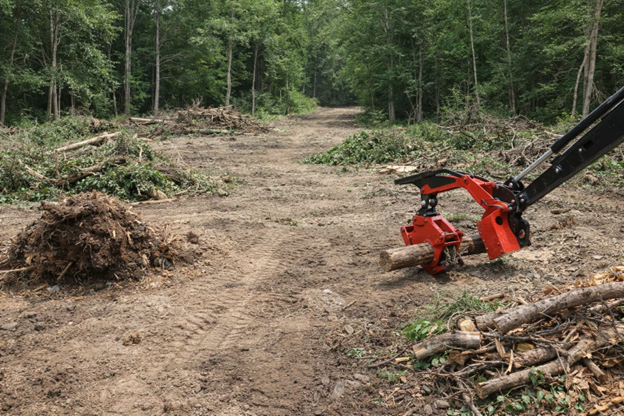
Land clearing often looks simple from a distance. Trees come down, brush is removed, and space opens up. That visible change gets most of the attention. The quieter part of the work begins right after. Debris remains across the site, sometimes in heavy piles, sometimes scattered in ways that are easy to miss, and handling it often requires controlled movement using tools such as a skid steer grapple rather than just pushing material aside. This stage shapes how usable the land really becomes.
If you have ever walked a “cleared” site that still felt hard to move across, you already understand the issue. Clearing is only half the job. What happens to the material left behind decides whether a project truly moves forward or stalls in small, costly ways.
What Counts as Debris After Clearing
Land debris is not limited to fallen trunks. It includes broken branches, root balls, brush piles, uneven organic matter, and loose material spread across the ground. Some of it is light. Some of it is dense and awkward to move.
The mix matters because not all debris creates the same risk. A loose brush can hide holes. Heavy piles can block access routes. Left unmanaged, both can slow down inspections, maintenance, or the next phase of work.
Why Cleanup Deserves Its Own Planning
Debris handling often gets treated as something to “figure out later.” That approach usually backfires. Material ends up being moved twice. Access paths get blocked. Equipment works around obstacles instead of efficiently through them.
Better projects plan for cleanup alongside clearing. That does not mean adding more steps. It means choosing methods that reduce repeat handling and keep the site predictable.
From a practical view, this saves time. From a public-interest view, it reduces risk and disruption.
Common Ways Debris Is Managed
There is no single method that fits every site. Conditions change. Terrain shifts. Project goals differ. Still, a few common approaches show up again and again.
Some crews pile debris for later removal. Others process material on-site so it can settle back into the ground. In many cases, a mix of both is used.
Each option affects:
- How soon can the land be accessed again
- Whether hauling is needed
- How stable the soil remains
The right choice depends on what the land needs next, not just what clears it fastest.
Equipment Choice Shapes the Outcome
Cleanup results often depend on how debris is handled, not how fast it is cut. Tools designed for controlled material movement allow work to stay organized rather than reactive.
This is where attachments like a skid steer grapple come into use. Instead of pushing material around or leaving piles in the way, debris can be lifted, grouped, and placed with intention. That control reduces clutter and keeps work zones clearer.
Better control also supports safety. Predictable movement matters more than speed on active sites.
Safety Is Not Just a Rulebook Item
Debris left in the wrong place creates quiet hazards. Hidden stumps trip workers. Unstable piles shift. Blocked sightlines raise the chance of accidents.
Good debris handling lowers those risks by:
- Keeping access routes open
- Improving visibility
- Reducing uneven ground
These details rarely show up in project summaries, but they shape daily working conditions.
Environmental Impact Is Part of the Decision
Cleanup choices also affect the land itself. Aggressive removal can disturb soil layers and increase erosion. Gentle processing helps organic material return to the ground without stripping it bare.
Thoughtful debris placement can:
- Reduce runoff
- Support soil stability
- Limit repeated ground disturbance
This approach aligns with how land is expected to perform long after equipment leaves.
Long-Term Effects Are Easy to Miss
Poor debris handling often shows its impact later. Drainage issues appear. Maintenance becomes harder. Future work costs more than expected.
Clean, controlled results make land easier to manage going forward. Roads stay clearer. Access remains consistent. The site behaves as planned.
Why This Part of the Process Matters
Land clearing is visible. Debris handling is not. Yet the second often matters more.
If you want land that works, not just land that looks cleared, cleanup methods deserve attention early. Thoughtful choices here reduce risk, protect the site, and make every next step easier to handle.
That is why debris management is not just cleanup. It is part of responsible land use.




Recent Comments